
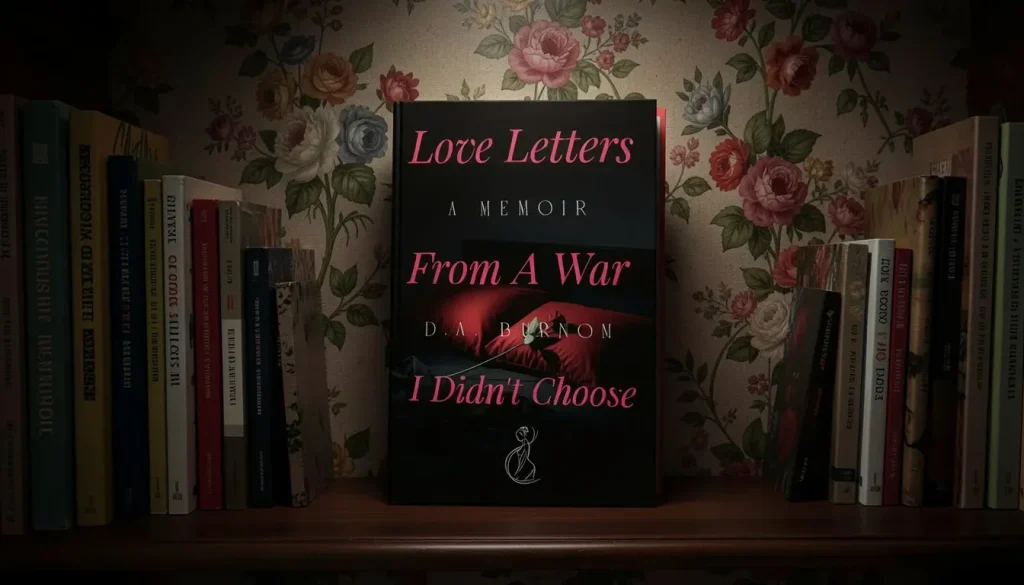
Some writers find their voice in a classroom. Others, however, find it in a journal tucked under a bed. D.A. Burnom found hers in one of the hardest moments of her life. Sitting in a closet, she chose to write instead of disappearing. That is not a metaphor. That is exactly what happened. And what came from that decision is now a real emotion poetry collection book reaching readers who did not know they needed this kind of honesty. Author Dedra Burnom published it as a debut that no one could have written without the story behind it. Moreover, the story behind it is everything.
Real Emotion Poetry Collection Book Through Memory and Time
D.A. Burnom served 24 years in the United States Air Force. She also earned three master’s degrees. After bankruptcy, she rebuilt a real estate portfolio from the ground up. By any external measure, her life is a story of achievement. But underneath those achievements were years of carrying things no resume could contain. For example, she faced Military Sexual Trauma, three divorces, and the weight of single parenthood during financial collapse. Furthermore, suicidal ideation nearly ended everything.
She did not have a mentor who handed her a pen. Nor did she stumble into a writing workshop that unlocked her voice. Instead, she stumbled into survival. As a result, writing became the way she documented that survival, year after year, in real time. That is what makes the work different. It was not written from a safe distance. In fact, it was written from inside the mess, before she knew how it would end.
Readers searching for the best emotional poetry books often find work that mistakes intensity for depth. Burnom, however, makes no such error. Her writing earns every emotion it carries. That is because the emotion was real first, before it was writing, before it was anything other than a woman trying to get through the night.
How Love Letters From A War I Didn’t Choose Is Structured
The book is built as journal entries spanning multiple years. Each one pulls you inside the mind of someone navigating impossible circumstances with no guarantee that things improve. There are no tidy arcs and no resolution that erases the loss. Additionally, each chapter closes with a Discovery section where Burnom reflects on what the experience taught her. These are not motivational footnotes. Rather, they are the reluctant, hard-won insights of a woman learning to carry what cannot be put down.
| Element | What Most Emotional Poetry Does | What Burnom Does Instead |
| Emotional source | Imagined or generalised experience | Directly lived, documented in real time |
| Resolution | Offers comfort or uplift at the end | Offers truth, even when it sits uncomfortably |
| Tone | Can lean toward sentimentality | Direct, unflinching, unembellished |
| Reader effect | Moved, then moved on | Seen, held, and quietly changed |
Modern Emotional Poetry Books and the Echoes They Leave
There is a specific kind of writing that does not ask for your sympathy. It simply asks for your attention. And it earns that attention by trusting you with the full weight of the truth. Among modern emotional poetry books, a significant portion expresses pain rather than inhabiting it. The reader can feel the difference. Performance has a polish. Truth, however, has a roughness. Similarly, Burnom’s writing has that roughness, and you feel it from the first page.
She writes about sitting in her closet with a gun in her hand and choosing to stay. In the mornings after, staying felt like the harder choice, and she wrote about those, too. Furthermore, she writes about faith not as a solution, but as a thread she held onto when everything else unraveled. Among life-changing poetry books, this is the kind that does not leave you feeling worse. In fact, it leaves you feeling lighter, not because your burden has changed, but because someone finally understood it.
This Book Is For You If…
- You have survived something the people around you cannot fully understand.
- In addition, you are tired of books that promise healing in a clean, linear way.
- You have been carrying something heavy and want to feel less alone in it.
- Above all, you believe that someone else’s truth, told without apology, can help you find your own.
On Inspirational Poetry Books to Read That Actually Earn That Word
Aristotle wrote about catharsis. Specifically, he believed that great literature purges emotion rather than simply triggering it. According to him, watching suffering, fully and honestly portrayed, left the audience not more burdened but more free. That is what the best writing does. It does not just move you. Instead, it shifts something deeper. Among inspirational poetry books to read in the veteran and survivor space, most fall into one of two traps. Either they are too gentle to be honest, or they focus so much on pain that they forget to point beyond it. Burnom, on the other hand, avoids both.
| Reader Situation | What This Book Offers | What It Will Not Do |
| In the middle of grief | Company, recognition, witness | Fix it or rush you through it |
| After surviving trauma | Proof that survival is enough | Tell you how you should feel about it |
| Feeling alone in your struggle | The specific comfort of being truly seen | Offer easy answers or neat conclusions |
What Readers Say After Finishing It
For many readers, it was the first book in a long time to make them feel genuinely seen. Moreover, the Discovery sections gave them language for things they had never been able to name. Because of this, some read it slowly, since rushing felt like a form of disrespect to its honesty. As a result, they passed it to someone they love without needing to explain why.
Among life-changing poetry books, reader responses like these are not common. They happen, however, when a book stops being a reading experience and starts being a shared one. That is the mark of poetry that heals through honesty, work that does not perform for the reader, but speaks directly to them.
| Book Category | What It Typically Offers | Where This Book Fits |
| Inspirational poetry | Hope and forward momentum | Yes, but earned through real survival |
| Trauma memoir | Raw testimony, witness to pain | Yes, journal-format entries across real years |
| Spiritual writing | Faith as a framework for meaning | Yes, woven through without becoming prescriptive |
| Modern emotional poetry | Personal truth, contemporary voice | Yes, among the most unguarded in the genre |
Among life-changing poetry books, this one arrives with more evidence behind it than most. Burnom did not write it to impress anyone. Instead, she wrote it to survive. The fact that it is also powerful writing is a consequence of that necessity, not a goal. And that distinction is everything.
Final Thoughts
A real emotion poetry collection book earns that description only when the emotion was real first, before the writing, before the publishing, before any of it. Burnom wrote that kind of book. She did not set out to be an author. Instead, she set out to stay alive. And in doing so, she created something that helps others do the same. Her collection, Love Letters From A War I Didn’t Choose, is poetry that heals through honesty, and that is the only kind worth reading. If you have been looking for a book that finally tells the truth without flinching, this is it. Author Dedra Burnom wrote it for exactly the moment you are in right now.
FAQs
Is this a real emotion poetry collection book or a memoir?
It is genuinely both. Burnom wrote it as journal entries with lyrical depth, blending memoir testimony with poetic reflection. As a result, the book sits in its own category entirely.
What makes Love Letters From A War I Didn’t Choose stand out?
The writing comes from documented lived experience. In fact, Burnom wrote these entries in real time, across real years, which gives every line a weight that performed emotion simply cannot match.
Who are the best emotional poetry books suited for?
Anyone who has survived something difficult and wants to feel less alone in it. You do not need to be a veteran or a trauma survivor. Above all, you just need to be human.
Are there inspirational poetry books to read that are honest rather than just uplifting?
Yes, and this is one of the best examples. Rather than minimising difficulty, Burnom’s writing inspires by proving that difficulty can be survived with honesty intact.
How do modern emotional poetry books differ from classic collections?
They tend to be more direct and more personal. Additionally, they are less concerned with formal structure. For these reasons, they prioritise truth of experience over technical perfection, which often makes them more immediately powerful.